
NOTE: In the 2015 BJCP Style Guidelines, Foreign Extra Stout has been reclassified to Style 16D in Category 16 Dark British Beer which contains average to strong, bitter to sweet, modern British and Irish stouts that originated in England even if some are now more widely associated with Ireland. In this case, “British” means the broader British Isles not Great Britain.
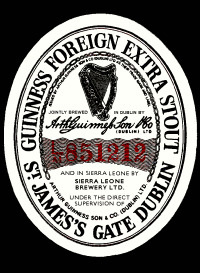
Foreign Extra Stout Description
As with all stouts, Foreign Extra Stout is defined by a single brewery, Guinness. It was also known as Foreign Export Double Stout and West Indies Porter at different dates.
West Indies Porter was brewed occasionally during the early 1800’s. It later became known as triple stout. After 1896 it was called Foreign Export Double Stout and is the forerunner of what we now call Foreign Extra Stout. This beer had the same gravity as Guinness’ Double Stout/Extra Stout but had more hops added and was aged longer. The longer aging added a little more ABV, about 0.8%.
These beers were originally traditional Irish Dry Stouts that were brewed to make the long journey to the tropical regions. The higher alcohol and hopping helped the stout make the long sea journey to the colonies.
Today, the more traditional Foreign Extra or Export Stouts will be found in the tropical regions of the world as many are still brewed there today. Most have a more pronounced roast character than the dry Irish stout.
The style is usually bigger than either the Oatmeal Stout or the Sweet Stout. The best examples of the style have a stronger coffee and chocolate character in the aroma and flavor. The esters from fermentation, the higher alcohol and the dark malts used give these beers dark fruit.
Many people confuse the hallmark beer in this category, the Guinness Foreign Extra Stout with another Guinness offering, the Guinness Extra Stout. One big difference is the alcohol content. The alcohol content of a Guinness Extra Stout is 5.6% ABV and the alcohol content of the Guinness Foreign Extra Stout is 7.5% ABV. According to the Guinness website, the Guinness Extra Stout is “Sharp and crisp to the taste, it’s an entirely different experience from the smooth, creamy Guinness Draught and punchier Foreign Extra Stout”.
It is a rather broad style which encompasses literally everything below a Russian Imperial Stout but stronger than a Dry Irish Stout. The style can be drier and less fruity as in the export versions, or it can be sweeter with more of a fruity character like those brewed in the tropics today. So you are looking at two distinct versions.
Brewing Tips:
To make the two different versions of this style, the difference will primarily be in the yeast selected. For the drier less fruity export version, use a clean fermenting yeast such as Wyeast 1056 American Ale yeast or White Labs WLP001 California Ale yeast. These yeasts tend to attenuate more leaving a drier cleaner beer.
For the sweeter fruiter version, use an English yeast which will leave some residual sugar and provide the fruity esters you are looking for. Be sure to give the beer a diacetyl rest when using the English yeast as diacetyl is not appropriate in the style.
- References: Information for this page was adapted from the BrewWiki article entitled Foreign Extra Stout, European Beer Guide.com article entitled Irish Breweries, styles-history-beers, the 2008 BJCP Style Guidelines, and Brewing Classic Styles 80 Winning Recipes Anyone Can Brew, written by Jamil Zainasheff and John J. Palmer.
To purchase a Stout Beer Kit from MoreBeer.com, Click Here.
Return to the Stout Styles Page