
NOTE: In the 2015 BJCP Style Guidelines, Dry Stout has been removed and in its place is Style 15B Irish Stout in Category 15 IRISH BEER which contains the traditional beers of Ireland. These beers are amber to dark, top-fermented beers of moderate to slightly strong strength, and are often widely misunderstood due to differences in export versions, or overly focusing on the specific attributes of beer produced by high-volume, well-known breweries. Each of the styles in this grouping has a wider range than is commonly believed.
Use the information below as a reference for Irish Stouts when studying for the current BJCP exam.
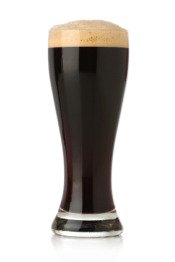
Dry Stout Description and Brewing Tips
Stouts in general, and dry stout in particular, has been defined by a single brewery, Guinness. The history of stouts began with the history of porters. For an in depth look at the early history of porter, check out this page on the porter style.
Stouts were once known as “stout porters”. As the turn of the 19th century arrived, the porter and stout styles were in decline, except in Ireland and a few other places in Great Britain. Ireland continued producing stout porters until the style was simply known as stout.
Around 1820 Guinness began brewing his stout porter to capitalize on the popularity of the style in Ireland. The stout produced back then was much different than today. When they originally called the beer “stout porter”, it was called stout for a reason. The OG of the stouts at the time were in the 1.070-1.090 range. Today, this beer is not really “stout” at all, in fact, many standard porters have more alcohol than the typical dry stout. Hop rates were much higher as well, approaching 90 IBUs in some cases.
Today, the definitive Irish stout, Guinness Extra Stout, is actually the lightest stout as far as alcohol which runs around 3.9% ABV and the bottled version comes in at around 6% ABV with the bittering IBUs in the 30-45 range. It’s no longer a “meal in a glass”, in fact, 12 oz. of Budweiser has more calories than a Guinness.
One of the other popular Dry Irish Stouts is Beamish Stout, which was originally brewed in Cork, Ireland by Beamish and Crawford. It’s now brewed at a Heineken Brewery nearby.
Brewing Tips for Dry Irish Stout Recipes:
Comments from BJCP Style Guidelines: “This is the draught version of what is otherwise known as Irish stout or Irish dry stout. Bottled versions are typically brewed from a significantly higher OG and may be designated as foreign extra stouts (if sufficiently strong). While most commercial versions rely primarily on roasted barley as the dark grain, others use chocolate malt, black malt or combinations of the three. The level of bitterness is somewhat variable, as is the roasted character and the dryness of the finish; allow for interpretation by brewers.”
English pale malt makes up most of the grain bill at 60-70%. For some commercial breweries, roasted barley is the only specialty malt used. This is not a general rule however as many will add flaked barley for body and head retention and sometimes carapils for extract brewers. Some add a small percentage of oatmeal or wheat (at around 6%) to enhance the body and mouthfeel. Other popular specialty grains include chocolate malts and black malts, but these are used in a very small amounts and primarily to add complexity to the beer. The hopping profile comes mostly from English hops such as East Kent Goldings or Fuggles, but may include Challenger, Northdown or Target. An Irish ale yeast is the traditional choice for an Irish stout, although other yeasts are used to get full attenuation and the dry character typical of the style.
Important factors to remember when brewing a dry stout are keeping the roast flavors within a narrow range which is acceptable for the style, getting good attenuation to achieve the dryness needed, and keeping the dark roasted grains from making an overly acidic beer. To accentuate the dry character in a dry stout, don’t include any caramel malt in the grain bill which can give sweet caramel flavors and negatively impact the dryness. It is traditional and almost essential to add some roasted barley to the recipe for that distinctive “dry stout” character. Many use flaked barley for body and mouthfeel as well, since the beer is generally very low in alcohol. As mentioned above, an Irish ale yeast will add the correct ester profile for this beer. But since this yeast doesn’t generally attenuate well, make sure you add enough healthy yeast and use a fermentation profile that ramps up the temperatures towards the end of fermentation to reduce diacetyl levels and insure proper attenuation. You can sometimes get away with a more neutral yeast, such as an American Ale yeast, to insure proper attenuation and the dry finish.
References: Information for this page was adapted in part from the Wikipedia article entitled Stout (beer), Brewing Classic Styles 80 Winning Recipes Anyone Can Brew, written by Jamil Zainasheff and John J. Palmer, and the 2008 BJCP Style Guidelines.
Recommended Articles:
Sweet Stout Style
Russian Imperial Stout
American Stout
Oatmeal Stout
Foreign Extra Stout
Purchase a Dry Stout All Grain Kit at MoreBeer.com